Women Deliver 2026 took place from 27 -30 April, and was regional hosted for the first time – by the Ocenic pacific – in Narrm (Melbourne), Australia on the unceded lands of the Wurundjeri Woi Wurrung people of the Kulin Nation.
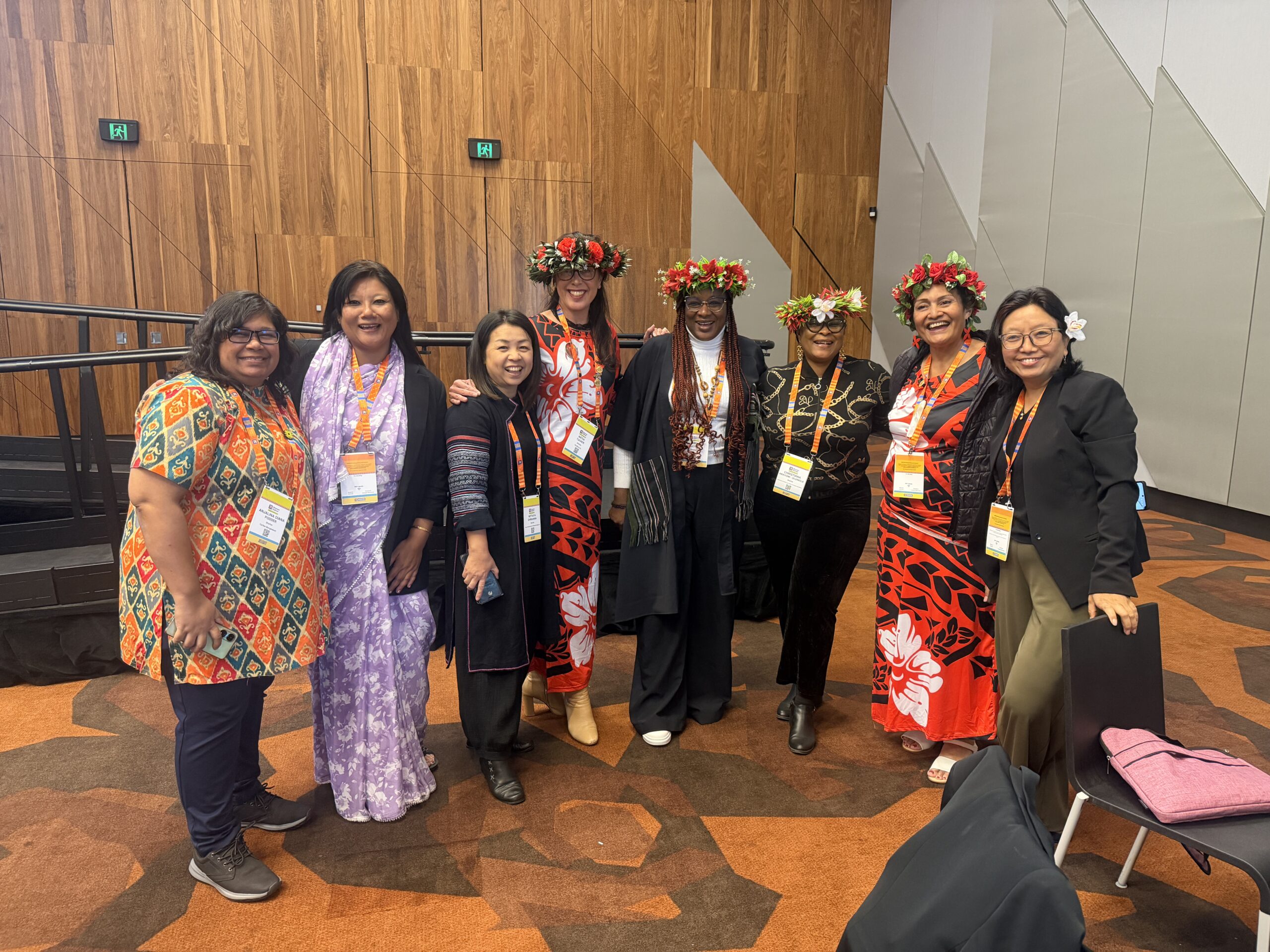
Over the 3 days, Melbourne welcomed close to 6000 participants and it was a landmark moment for advocates at the intersection of gender justice and environmental stewardship. The global conference—bringing together policymakers, activists, researchers, funders, and young leaders—placed reproductive health, rights, and gender equality at the heart of sustainable development conversations. Among the many coalitions and movements present, Women4Biodiversity stood out for centering biodiversity and the work of the Convention on Biological Diversity (CBD) and the Kunming-Montreal Global Biodiversity Framework as an essential element of gender justice to share with the conference delegates.
Framing biodiversity as a gender issue was central to Women4Biodiversity’s contribution. The group began by challenging a common siloed approach: too often, gender equity initiatives focus narrowly on health, education, or economic empowerment and climate change without explicitly connecting those struggles to the health of ecosystems and the loss of biodiversity. Women4Biodiversity joined, participated and shared experiences through attending various events of the conference on the need to address biodiversity and how it underpins food security, livelihoods, cultural practices, and health systems that support women in many communities, especially Indigenous and local communities from the land to the oceans. Loss of biodiversity either terrestrial or marine and coastal ecosystems, therefore exacerbates gender inequities, while gender-blind environmental policy can undermine both climate and conservation goals.
The session Women4Biodiversity organized, “Biodiversity and Gender Justice: Pathways to the Melbourne Declaration,” convened diverse voices: Indigenous leaders, grassroots organizers, scientists, policy advisors, youth activists, and representatives from multilateral agencies. The interactive session was part of the Declaration Hub – Thematic Consultation The format blended short, evidence-based presentations with storytelling and participatory dialogue. This design was intentional: it aimed to have a safe and open space to invite participants from the conference to come together and share—on how biodiversity loss affects women’s livelihoods, maternal and child health, and climate resilience—with narratives that underscored the cultural and emotional stakes of these harms. The result was a conversation that was as urgent as it was practical.
Key themes emerged from the session:
– Intersectional analysis is necessary. Participants emphasized that gender is not monolithic—experiences differ by race, class, indigeneity, disability, age, sexuality, and geography. Policies to conserve biodiversity or restore ecosystems must be designed with intersectional lenses to avoid reinforcing existing inequalities.
– Women’s and Indigenous knowledge must be recognized and resourced. Several speakers highlighted how Indigenous women and local resource users steward biodiversity through traditional ecological knowledge, seed saving, and community-managed conservation. Rather than being treated merely as beneficiaries, these knowledge holders should be partners in the design, implementation, and governance of biodiversity interventions.
– Secure land and resource rights for women are foundational. Without legal and social recognition of women’s rights to land, water, and commons, conservation and restoration efforts can inadvertently dispossess women or limit their agency. The session called for integrating land tenure reforms and gender-responsive governance into biodiversity strategies.
– Funding and capacity-building need to be gender-responsive. Donor and domestic funding streams for conservation often overlook small-scale, community-led initiatives that rely heavily on women’s labor. Redirecting resources, simplifying grant access, and investing in leadership training for women and gender-diverse people were proposed as concrete actions.
– Cross-sectoral policies drive impact. The session underscored that biodiversity outcomes influence—and are influenced by—sectors like health, agriculture, and education. Effective, gender-equitable biodiversity strategies require collaboration across ministries and with civil society.
The Melbourne Declaration—crafted through a consultation with over 650 people across regions was presented at Women Deliver 2026, prior to the Conference. During the Conference, through thematic consultation , some reflections were shared and put forward for some pragmatic policy recommendations to further inform the Melbourne Declaration. These included:
– Explicitly incorporate gender indicators into biodiversity monitoring and reporting frameworks, ensuring data collection is disaggregated and includes qualitative measures of well-being and access.
– Prioritize financing mechanisms for community-based conservation led by women and Indigenous peoples, including microgrants, blended finance, and direct budget allocations.
– Embed gender and social safeguards in biodiversity projects to prevent harms such as displacement or the marginalization of local custodians of biodiversity.
– Support legal reforms to strengthen women’s tenure and resource rights, coupled with community-driven dispute resolution mechanisms.
– Invest in women’s leadership at all levels to be informed and have the resources to support them in their work on the ground.
Beyond policy recommendations, Women4Biodiversity’s session left a palpable sense of possibility. Participants shared examples of successful models: women-led marine protected area co-management that improved fish stocks and household food security; agroecology projects where women seed networks increased crop diversity and resilience; and community-led restoration initiatives that revived culturally important species while creating income opportunities. These case studies served as proof that linking gender justice and biodiversity conservation is not only equitable but effective.
While declarations are only the start, the explicit inclusion of biodiversity at the Women Deliver 2026 Conference the consultation hoped to signal the need to bring together climate, biodiversity and landt in global thinking: the environmental determinants of gender equality would no longer be a discussion to be discussed in silos, but rather as central to our collective rights to a clean, healthy and sustainable environment..
Women4Biodiversity left Melbourne with clear next steps. To scale up pilot projects that demonstrated co-benefits for biodiversity and gender justice, and to advocate for dedicated funding streams to support women’s led organizations abd committed to expanding partnerships to ensure future actions remain grounded in the knowledge and leadership of those most affected.
Women Deliver 2026 in Melbourne thus marked more than a meeting of minds—it seeded a growing consensus that gender justice and biodiversity are mutually reinforcing goals. By organizing a session that moved from evidence to policy to practice, Women4Biodiversity participation aimed to serve as a bridge between the worlds of gender advocacy and environmental stewardship, shaping policies that are fairer, more resilient, and better grounded in the realities of communities around the world – and breaking silos.