
Photo credit: Maldhari Rural Action Group (MARAG)
WHAT
As a continuation of the Restore Her Rights webinar series, this session will highlight three significant women-led restoration initiatives in India and Thailand. The three case studies are part of the “Weaving Gender into Restoration: Building Futures Through Leadership, Knowledge, and Rights in Restoration” call for case studies, and each documents the impact of on-the-ground women-led restoration, amplifying their voices, and exploring how local action shapes global environmental policy.
WHEN
Friday, 13 March 2026, from 12.00 pm to 1.30 pm UTC. Please check your timezone here.
WHERE
Online event.
WHO
- Lucia Rivera Lima, Forest Restoration and Social Inclusion Consultant, the Food and Agriculture Organization of the United Nations (FAO) – Keynote Speaker
- Megha Sheth, Maldhari Rural Action Group (MARAG), India
- Deviben Rabari from the Women Pastureland Management Committee, India
- Ravadee Prasertcharoensuk, Sustainable Development Foundation (SDF), Thailand
- Kanlaya Chuttakorn, Indigenous Women’s Association for Development (IWAD), Thailand
- Mrinalini Rai, Founder & Director, Women4Biodiversity – Closing remarks
- Rubina Pradhan, Coordinator-Restore Her Rights, Women4Biodiversity – Moderator
WHY
- This webinar documents real case studies of women-led ecosystem restoration from around the world, creating a lasting body of evidence that reflects the scale and impact of their contributions.
- By connecting on-the-ground restoration efforts to international policy frameworks, this session helps ensure that women’s work moves from the margins to the centre of global environmental decision-making.
- Attendees will gain insights from diverse voices across regions and sectors — and leave with a deeper understanding of how women-led restoration can be amplified, replicated and institutionally supported.
This webinar is the final part of a larger series, “Restore Her Rights Initiative Webinar Series’. The series focuses on advancing gender equality and women’s roles in ecosystem restoration, addressing barriers, and promoting gender-responsive policies.


Espanol
QUÉ
Como continuación de la serie de seminarios web «Restore Her Rights», esta sesión destacará tres importantes iniciativas de restauración lideradas por mujeres en la India y Tailandia. Los tres casos de estudio forman parte de la convocatoria de casos de estudio «Weaving Gender into Restoration: Building Futures Through Leadership, Knowledge, and Rights in Restoration» (Incorporar la perspectiva de género en la restauración: construir futuros a través del liderazgo, el conocimiento y los derechos en la restauración), y cada uno de ellos documenta el impacto de la restauración sobre el terreno liderada por mujeres, amplificando sus voces y explorando cómo la acción local da forma a la política ambiental global.
CUÁNDO
Viernes, 13 de marzo de 2026 de 12:00 a 13:30 UTC. Por favor, compruebe su zona horaria aquí.
DÓNDE
Evento en línea.
QUIÉN
- Lucia Rivera Lima, consultora de restauración forestal e inclusión social, Organización de las Naciones Unidas para la Alimentación y la Agricultura (FAO) – Oradora principal
- Megha Sheth, Grupo de Acción Rural Maldhari (MARAG), India
- Deviben Rabari, del Comité de Mujeres para la Gestión de Pastizales, India
- Ravadee Prasertcharoensuk, Fundación para el Desarrollo Sostenible (SDF), Tailandia
- Kanlaya Chuttakorn, Asociación de Mujeres Indígenas para el Desarrollo (IWAD), Tailandia
- Mrinalini Rai, fundadora y directora de Women4Biodiversity – Palabras de cierre
- Rubina Pradhan, coordinadora de Restore Her Rights, Women4Biodiversity – Moderadora
POR QUÉ
- Este seminario web recoge casos prácticos reales de restauración de ecosistemas liderados por mujeres en todo el mundo, creando un conjunto de datos duradero que refleja la magnitud y el impacto de sus contribuciones.
- Al vincular las iniciativas de restauración sobre el terreno con los marcos normativos internacionales, esta sesión contribuye a garantizar que el trabajo de las mujeres pase de ocupar un lugar marginal a situarse en el centro de la toma de decisiones medioambientales a nivel mundial.
- Los participantes obtendrán información valiosa de diversas voces de todas las regiones y sectores, y saldrán con una comprensión más profunda de cómo la restauración liderada por mujeres puede ampliarse, replicarse y recibir apoyo institucional.
Este seminario web es la parte final de una serie más amplia, la «Restore Her Rights Initiative Webinar Series». La serie se centró en promover la igualdad de género y el papel de las mujeres en la restauración de ecosistemas, abordar las barreras y promover políticas sensibles al género.
Francais
QUOI
Como continuación de la serie de seminarios web «Restore Her Rights», esta sesión destacará tres importantes iniciativas de restauración lideradas por mujeres en la India y Tailandia. Los tres casos de estudio forman parte de la convocatoria de casos de estudio «Weaving Gender into Restoration: Building Futures Through Leadership, Knowledge, and Rights in Restoration» (Incorporar la perspectiva de género en la restauración: construir el futuro a través del liderazgo, el conocimiento y los derechos en la restauración), y cada uno de ellos documenta el impacto de las iniciativas de restauración sobre el terreno lideradas por mujeres, amplificando sus voces y explorando cómo la acción local da forma a la política ambiental global.
QUAND
Viernes, 13 de marzo de 2026, de 12 h à 13 h 30 UTC. Veuillez vérifier votre fuseau horaire ici.
Où
Événement en ligne.
QUI
- Lucia Rivera Lima, consultora de restauración forestal e inclusión social, Organización de las Naciones Unidas para la Alimentación y la Agricultura (FAO) – Oradora principal
- Megha Sheth, Grupo de Acción Rural Maldhari (MARAG), India
- Deviben Rabari, del Comité de Mujeres para la Gestión de Pastizales, India
- Ravadee Prasertcharoensuk, Fundación para el Desarrollo Sostenible (SDF), Tailandia
- Kanlaya Chuttakorn, Asociación de Mujeres Indígenas para el Desarrollo (IWAD), Tailandia
- Mrinalini Rai, fundadora y directora de Women4Biodiversity – Palabras de clausura
- Rubina Pradhan, coordinadora de Restore Her Rights, Women4Biodiversity – Moderadora
POURQUOI
- Este seminario web documenta casos de estudio reales de restauración de ecosistemas liderados por mujeres de todo el mundo, creando un conjunto de pruebas duraderas que reflejan la magnitud y el impacto de sus contribuciones.
- Al conectar los esfuerzos de restauración sobre el terreno con los marcos de políticas internacionales, esta sesión ayuda a garantizar que el trabajo de las mujeres pase de los márgenes al centro de la toma de decisiones ambientales a nivel mundial.
- Los asistentes obtendrán información valiosa de diversas voces de todas las regiones y sectores, y saldrán con una comprensión más profunda de cómo la restauración liderada por mujeres puede ampliarse, replicarse y recibir apoyo institucional.
Ce webinaire est le dernier volet d’une série plus large, la « Restore Her Rights Initiative Webinar Series ». La série s’est concentrée sur la promotion de l’égalité des sexes et du rôle des femmes dans la restauration des écosystèmes, la suppression des obstacles et la promotion de politiques sensibles au genre.
ภาษาไทย
อะไร
การสัมมนาออนไลน์ครั้งนี้เป็นส่วนหนึ่งของชุดสัมมนาออนไลน์ Restore Her Rights โดยจะเน้นกรณีศึกษาการฟื้นฟูที่นำโดยผู้หญิง 3 โครงการสำคัญในอินเดียและไทย กรณีศึกษาทั้งสามนี้เป็นส่วนหนึ่งของโครงการ “Weaving Gender into Restoration: Building Futures Through Leadership, Knowledge, and Rights in Restoration” ซึ่งเปิดรับกรณีศึกษา และแต่ละกรณีศึกษาจะบันทึกผลกระทบของการฟื้นฟูที่นำโดยผู้หญิงในพื้นที่จริง ขยายเสียงของพวกเธอ และสำรวจว่าการดำเนินการในระดับท้องถิ่นส่งผลต่อแนวนโยบายด้านสิ่งแวดล้อมระดับโลกอย่างไร
เมื่อไหร่
วันศุกร์ที่ 13 มีนาคม 2569 เวลา 12.00 น. – 13.30 น. UTC โปรดตรวจสอบเขตเวลาของคุณที่นี่
ที่ไหน
กิจกรรมออนไลน์
ผู้ร่วมบรรยาย
- ลูเซีย ริเวรา ลิมา ที่ปรึกษาด้านการฟื้นฟูป่าและการมีส่วนร่วมทางสังคม องค์การอาหารและเกษตรแห่งสหประชาชาติ (FAO) – วิทยากรหลัก
- เมฆา เชธ กลุ่มปฏิบัติการชนบทมัลธารี (MARAG) อินเดีย
- เดวิเบน ราบารี จากคณะกรรมการบริหารจัดการทุ่งหญ้าสตรี อินเดีย
- ราวดี ประเสริฐเจริญสุข มูลนิธิเพื่อการพัฒนาอย่างยั่งยืน (SDF) ประเทศไทย
- กันลยา ชุตตะกร สมาคมสตรีพื้นเมืองเพื่อการพัฒนา (IWAD) ประเทศไทย
- มรินาลินี ไร ผู้ก่อตั้งและผู้อำนวยการ Women4Biodiversity – กล่าวปิดงาน
- รูบินา ประธาน ผู้ประสานงานโครงการฟื้นฟูสิทธิของเธอ Women4Biodiversity – ผู้ดำเนินรายการ
เหตุผล
- การสัมมนาออนไลน์นี้บันทึกกรณีศึกษาจริงของการฟื้นฟูระบบนิเวศที่นำโดยสตรีจากทั่วโลก สร้างหลักฐานที่ยั่งยืนซึ่งสะท้อนถึงขนาดและผลกระทบของการมีส่วนร่วมของพวกเธอ
- ด้วยการเชื่อมโยงความพยายามในการฟื้นฟูในพื้นที่เข้ากับกรอบนโยบายระหว่างประเทศ เซสชั่นนี้จะช่วยให้มั่นใจได้ว่างานของสตรีจะก้าวจากส่วนชายขอบไปสู่ศูนย์กลางของการตัดสินใจด้านสิ่งแวดล้อมระดับโลก
- ผู้เข้าร่วมจะได้รับข้อมูลเชิงลึกจากหลากหลายเสียงในภูมิภาคและภาคส่วนต่างๆ และจะมีความเข้าใจที่ลึกซึ้งยิ่งขึ้นเกี่ยวกับวิธีการขยายผล การทำซ้ำ และการสนับสนุนเชิงสถาบันของการฟื้นฟูที่นำโดยสตรี
การสัมมนาออนไลน์ครั้งนี้เป็นส่วนสุดท้ายของชุดการสัมมนาออนไลน์ “ชุดการสัมมนาออนไลน์ริเริ่มฟื้นฟูสิทธิสตรี” ซึ่งมุ่งเน้นไปที่การส่งเสริมความเท่าเทียมทางเพศและบทบาทของสตรีในการฟื้นฟูระบบนิเวศ การแก้ไขอุปสรรค และการส่งเสริมนโยบายที่คำนึงถึงความเท่าเทียมทางเพศ


Event Summary
The moderator of the event was Rubina Pradhan, Coordinator of the Restore Her Rights (RHR) Initiative, began the first webinar of 2026 by commemorating International Women’s Day and the 70th annual Commission on the Status of Women (CSW70). She outlined the objectives of the RHR platform, which aims to promote gender-responsive policies, celebrate women’s impact, facilitate collaboration, and provide resources and capacity-building initiatives for women and allies. The webinar included live interpretation in multiple languages and was streamed on YouTube, with house rules in place to ensure a respectful and engaging session.
Highlights
The webinar featured presentations from four speakers,
- Lucia Rivera Lima, FAO’s Forest and Landscape Restoration Mechanism, discussed the importance of gender-responsive approaches to restoration.
- Megha Seth from Maldhari Rural Action Group (MARAG) and Deviben Rabari, who leads the Women Pastureland Management Committee (WPLMC) in her village in Dhabda, India, shared their work on pastureland restoration through WPLMCs.
- Ravadee Prasertcharoensuk from the Sustainable Development Foundation (SDF) Thailand, presented on community-led mangrove restoration and community resistance to carbon credit policies.
- Kanlaya Chularattakorn from the Indigenous Women’s Association for Development (IWAD) Thailand, discussed reviving traditional Hmong medicinal plants and food crops.
Their presentations highlighted various challenges including social norms, land rights, funding access, and policy barriers that women face in restoration and conservation work, while also showcasing successful community-led initiatives and the critical role of women as stewards of ecosystem restoration.

Gender-Responsive Forest Restoration Case Studies
The meeting focused on launching three case studies that build on Women with Biodiversity’s previous work and highlight efforts from organizations in South and Southeast Asia. Lucia Rivera Lima, a forest restoration and social inclusion consultant with FAO, delivered a keynote address emphasizing the importance of a gender-responsive approach to restoration, noting that women often play significant roles in forest-related work but their contributions are frequently undervalued. The discussion highlighted the need for intersectional approaches that consider the diverse experiences of women across different contexts, and the importance of documenting and sharing local knowledge and practices in restoration efforts.
Restoring Commons, Restoring Biodiversity: Pastoralist Women’s Leadership in Pastureland Regeneration in Kutch, Gujarat, India
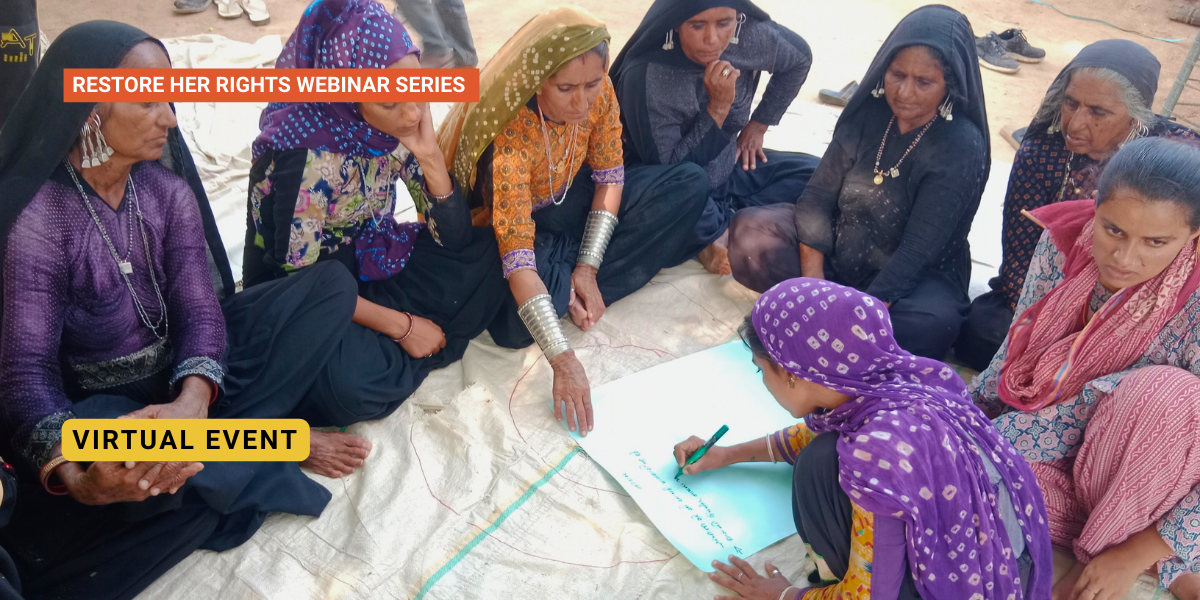
The case study “Restoring Commons, Restoring Biodiversity: Pastoralist Women’s Leadership in Pastureland Regeneration in Kutch, Gujarat, India,” details the efforts of the Maldhari Rural Action Group (MARAG) and the Pastoral Women Alliance (PWA) to combat the severe degradation of village pasturelands (gauchars) in the semi-arid Rapar Block of Kutch. Megha Sheth and Deviben Rabari presented on women-centered pastureland restoration in the Kutch region of Gujarat. Deviben shared her experience as a leader in the Women Pastureland Management Committee, explaining how women are now involved in managing and restoring grazing lands, despite traditionally being excluded from such decisions. The restoration process involves not only physical work like clearing invasive species but also empowering women to negotiate with other community members and government officials, with support from MARAG’s initiatives under schemes like MNREGA.

Pastoral Women’s Land Restoration Initiative
Megha presented on pastureland restoration efforts led by pastoralist women in 10 villages, highlighting challenges they face due to shrinking commons and climate change. MARAG facilitated the establishment of women-led committees in each village, focusing on restoring pastureland and securing community ownership through legal documentation. While successful in two villages, challenges remain in eight others, with strategies including silver pasture models, native grass propagation, and intergenerational knowledge transfer. The presentation concluded with examples of before and after restoration efforts, emphasizing the women’s role in biodiversity conservation and food sovereignty.
Women Leading Just Carbon Solutions: Feminist Participatory Action Research (FPAR), Customary Rights and Mangrove Biodiversity
Ravadee Prasertcharoensuk presented the Sustainable Development Foundation’s (SDF) case study on community-led mangrove restoration and biodiversity conservation in Ban Prednai, Trat Province, Thailand. The initiative used Feminist Participatory Action Research (FPAR) to empower women, who were disproportionately affected by past development policies, as active leaders. This led to a community proposal accepted by the Department of Marine and Coastal Resources (DMCR) and a strong community resistance against carbon credit policies imposed on their long-managed forests. The case study asserts that successful mangrove restoration must move beyond carbon credit policies to address social inequalities and promote community-led conservation, with FPAR serving as both a knowledge production method and a form of collective struggle.

Reviving Traditional Hmong Crops: Women-led Restoration of Agrobiodiversity and Food Security in Ban Suan Sai, Nan Province, Thailand
Kanlaya Chularattakorn presented on reviving traditional Hmong crops and food security in the Ban Suan Sai village in Nan province, Thailand. She highlighted how Indigenous women play crucial roles as stewards of ecosystem restoration, managing seeds, medicinal plants, and traditional food systems. Kanlaya described how her organization, Indigenous Women’s Association for Development (IWAD), worked with Hmong women to establish a community enterprise called Hmong herbal healing groups (HNT), which has helped revive traditional plants, create income opportunities, and empower women in the community.
Kanlaya further shared photographs showing Hmong women in Ban Suan Sai village growing traditional herbs, processing Hmong herbs and participating in knowledge-sharing sessions about Hmong traditional medicine.

Challenges
Ravadee highlighted the challenges in community mobilization, particularly around patriarchal social norms that make it difficult for women and men to participate equally in community meetings and decision-making processes. Women and men play certain roles, and it is difficult to break free from these expectations, especially in terms of valuing the knowledge they have. Organizations have to continuously emphasize on awareness raising within communities. Megha emphasized how in India, women face various intersecting challenges stemming from issues such as caste, class, gender and hierarchy. She reiterated that pastoralist women face double marginalization when asserting their collective rights over commons, especially the grazing lands and pasturelands. This is because they already belong to a marginalized pastoralist community, and challenges are exacerbated due to their gender. Therefore, owning land and asserting collective rights over grazing/pasturelands is a major challenge, as legally, there are no provisions that protect pastoralist women’s collective rights. Finally, Kanlaya spotlighted how Hmong women have been taught to prioritize their households over their individual achievements. Thus, it is important to train them and encourage Hmong women to participate in self-development. There is a need to change knowledge, attitudes and practices within families, and the communities to spotlight the importance of women’s development and capacity building, especially how it not only benefits women, but the family and community.
The panelists emphasized the importance of recognizing that working with communities and women is not linear, and that it is a process, whereby factors such as funds, commitment, legal aspects, engagement with the government and diverse stakeholders must be ensured despite its challenges. The discussion concluded with Ravadee describing ongoing efforts to secure government funding and support for community-led initiatives through engagement with departments like the Department of Marine and Coastal Resources and the Department of Women and Gender Equality.
Ravadee emphasized that SDF is the only organization that is focused on multi-stakeholder engagement in Thailand. At present, the Department of Women and Gender Equality has allocated some budget for gender equality processes. Similarly, the community at Ban Pred Nai advocated to accept customary rights over their mangrove forests. The Department of Marine and Coastal Resources has started to allocate resources for the community. These are all opportunities for the sustainability of the program.

The webinar focused on discussing case studies of women-led restoration initiatives, particularly in Asia. Mrinalini Rai, Director of W4B emphasized the growing recognition of women’s rights in biodiversity and conservation policies at international levels. She highlighted the importance of funding community-based organizations and ensuring that restoration efforts consider economic, social, and cultural indicators beyond just environmental metrics. The panelists discussed challenges such as securing sustainable funding and addressing issues like patriarchy and land rights, while also noting the ongoing work and traditional knowledge of women in conservation and restoration efforts. The session concluded with a virtual group photo and expressions of gratitude from the participants and organizers.