

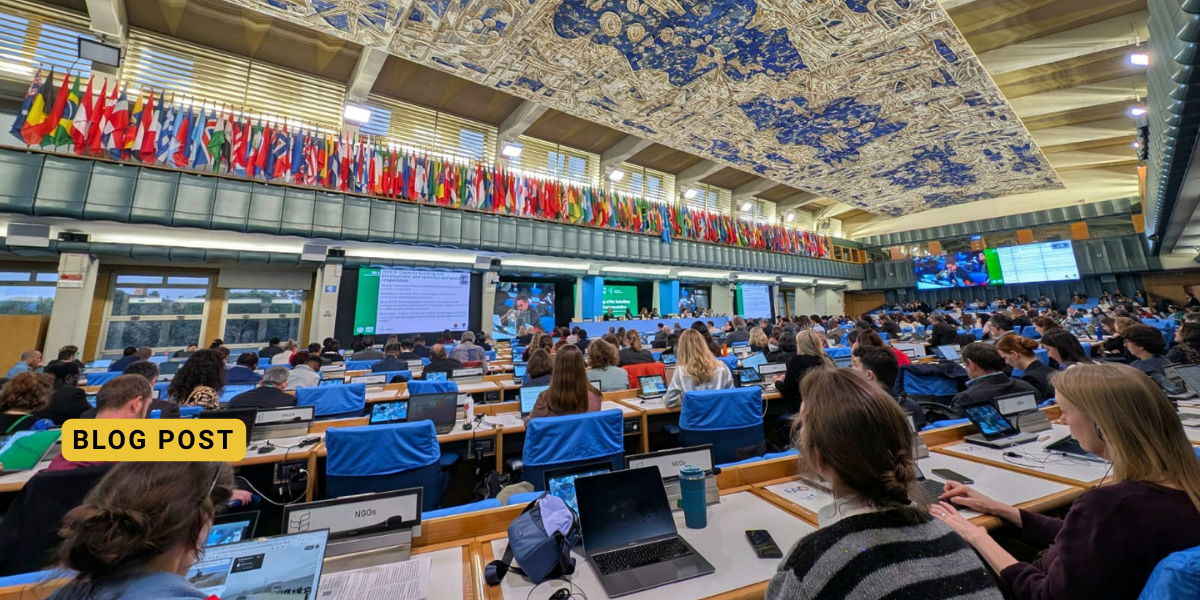
The plenary session during SBI-6. Image credit: Alejandra Duarte, Women4Biodiversity
The Sixth meeting of the Subsidiary Body on Implementation (SBI-6) of the Convention on Biological Diversity (CBD) was held in Rome, Italy, from 16 to 19 February 2026. Taking place at the midpoint of the implementation of the Kunming-Montreal Global Biodiversity Framework (KM-GBF), the meeting addressed several issues, including resource mobilization and financial mechanism (Item 3); planning, monitoring, reporting and review (Item 4); the mid-term review of the implementation of the Gender Plan of Action (2023–2030) (Item 5); capacity-building and technical and scientific cooperation (Item 6); and cooperation with other conventions and international organizations (Item 7).
During negotiations, many developing country Parties emphasized the lack of adequate and accessible financial resources necessary to implement the commitments under the Framework. These structural challenges were particularly evident in discussions on planning, monitoring, reporting, and review, as SBI-6 took place only days before the deadline for the submission of the seventh national reports (the submission deadline for the national reports was 28 February 2026, agreed in decision 15/6), a key input for the Global review of collective progress under the KM-GBF. Several Parties noted that financial constraints and limited technical capacity have affected their ability to prepare national reports within the required timelines. Financial and capacity constraints were also reflected in discussions on the mid-term review of the Gender Plan of Action (2023–2030).
The review highlighted the need to strengthen monitoring and reporting on gender-responsive implementation at the national level. Parties were encouraged to use the component indicator developed to support monitoring of the CBD’s Gender Plan of Action (GPA), as its methodology aligns directly with the GPA’s indicative actions for Parties.
However, effective implementation of the GPA continues to depend on the availability of financial resources, technical support, and gender-responsive data systems. Without these enabling conditions, progress toward operationalizing Target 23 of the KM-GBF and integrating gender equality across biodiversity policies risks remaining limited.

Alejandra Duarte at SBI-6. Image credit: Alejandra Duarte, Women4Biodiversity
Discussions on capacity-building and technical and scientific cooperation further emphasized the importance of strengthening regional and international collaboration to support implementation. Parties highlighted the role of technical and scientific cooperation centres in working with governments, civil society organizations, and local actors to strengthen national capacities. Such cooperation is particularly important for advancing gender-responsive implementation, including by developing gender-disaggregated data, strengthening women’s participation and leadership in biodiversity governance, and facilitating the exchange of knowledge and good practices across regions.
The agenda item on cooperation with other conventions and international organizations also underscored the need to enhance synergies between the CBD and other multilateral environmental agreements. Strengthening collaboration across biodiversity, climate and pollution-related frameworks is increasingly necessary to address interconnected environmental crises and avoid fragmented approaches to implementation. However, discussions also reflected the need to ensure that cooperation respects the distinct mandates of each convention while enabling mutually supportive implementation.
Overall, SBI-6 highlighted the continuing gap between the ambition of the Kunming-Montreal Global Biodiversity Framework (KM-GBF) and the resources and institutional capacities required for its implementation.
Persistent challenges related to equity, access to finance, and capacity constraints remain central barriers for many developing country Parties. As Parties prepare for the Seventh meeting of the Subsidiary Body on Implementation (SBI-7) and the Seventeenth meeting of the Conference of the Parties to the Convention on Biological Diversity (COP-17), addressing these structural issues will be essential to ensure that the KM-GBF can move beyond commitments toward effective, inclusive, and gender-responsive implementation.