
Introduction
Secure land rights for women are not only a matter of justice and gender equality — they are a high-impact lever for achieving climate resilience (UNFCCC), halting and reversing land degradation (UNCCD), and conserving biodiversity (CBD). Across diverse landscapes, women are primary land users, stewards of agrobiodiversity, and first responders to climate and ecological shocks. Strengthening women’s land rights amplifies their capacity to steward ecosystems sustainably, access finance and technologies, and participate in governance — accelerating progress across all three Rio Conventions.
Why women’s land rights matter for the three Conventions
– Climate mitigation & adaptation (UNFCCC): Secure rights enable women to invest in long-term practices — agroforestry, sustainable soil management, tree planting — that mitigate and increase resilience to climate impacts. Women with land tenure are more likely to access climate financing, insurance, and extension services.
– Land degradation neutrality (UNCCD): Tenure security encourages sustainable land management (SLM), reduced overuse, and restoration activities. Women’s traditional ecological knowledge and labor are critical for restoring degraded soils, managing water, and maintaining landscape connectivity.
– Biodiversity conservation (CBD): Women often manage seed systems, maintain crop diversity, and practice locally adapted conservation methods. Secure tenure enables community-based conservation, protected area co-management, and safeguards for customary use that supports biodiversity.
A year of the Triple COPs – An opportunity
Strengthening women’s land rights is especially strategic in 2026 because this year brings an unprecedented convergence of global policy moments: the triple COPs – for climate, biodiversity, and desertification. With negotiators, ministers, funders, and civil society converging, 2026 offers a unique policy window to align commitments, finance, and implementation across the three Rio Conventions. Advancing women’s land rights at this moment raises the profile of a cross-cutting solution that delivers simultaneous gains: it provides a clear, politically compelling entry point for countries to show ambition on multiple fronts by adopting measures that are legally and operationally transferable across NDCs, NBSAPs, and NAPs – the national reporting modalities for the Rio Conventions.
Addressing women’s land rights during the triple COPs can accelerate the mainstreaming of gender-responsive tenure into the major funding and reporting mechanisms that will be under review. Donors and multilateral funds are more likely to attach gender and tenure safeguards to new financing windows when negotiating agendas emphasize integrated outcomes. If women’s land rights are framed as a measurable, cost-effective lever for climate mitigation, landscape restoration, and biodiversity stewardship, the triple COP moment can channel resources toward joint titling programs, community-led initiatives that would otherwise compete for siloed funding and mobilization of resources. This creates opportunities to pilot scalable models where finance and resource mobilization for climate mitigation or adaptation explicitly supports tenure interventions that unlock women’s access to inputs, markets, and technical assistance.
Politically, elevating women’s land rights during the 2026 COP cycle helps build alliances across ministries and stakeholders who normally inhabit separate policy ecosystems. Land ministries, environment agencies, gender focal points, and relevant organizations can be encouraged to co-design policy packages because the triple COPs make inter-ministerial cooperation both visible and necessary. That visibility also strengthens accountability: countries that commit to integrated gender-responsive tenure actions in 2026 can be monitored on progress across multiple reporting frameworks, creating incentives for follow-through and for civil society to hold governments to their promises.
A multiplier effect for people and planet
Securing women’s land rights is a high-return investment: it strengthens livelihoods, deepens democratic participation, and delivers measurable gains in climate mitigation/adaptation, land restoration, and biodiversity conservation. For the Rio Conventions to meet their ambitions, integrated policy packages that place women’s tenure at the center — backed by finance, data, and inclusive governance — are essential.
The symbolic power of the triple COPs can shift norms. Presenting women’s land rights as central to achieving climate targets, reversing land degradation, and halting biodiversity loss reframes tenure not as a peripheral social policy but as a core environmental strategy. This reframing can reduce political resistance by emphasizing shared environmental and economic returns, making it easier to overcome entrenched legal and cultural barriers. In short, 2026’s convergence of global attention, resource mobilization, and political momentum makes it an ideal moment to push for systemic, cross-cutting reforms that secure women’s land rights and thereby unleash powerful co-benefits for people and the planet.
”Strengthening women’s land rights is not peripheral to environmental goals; it is a catalytic pathway to achieving them.
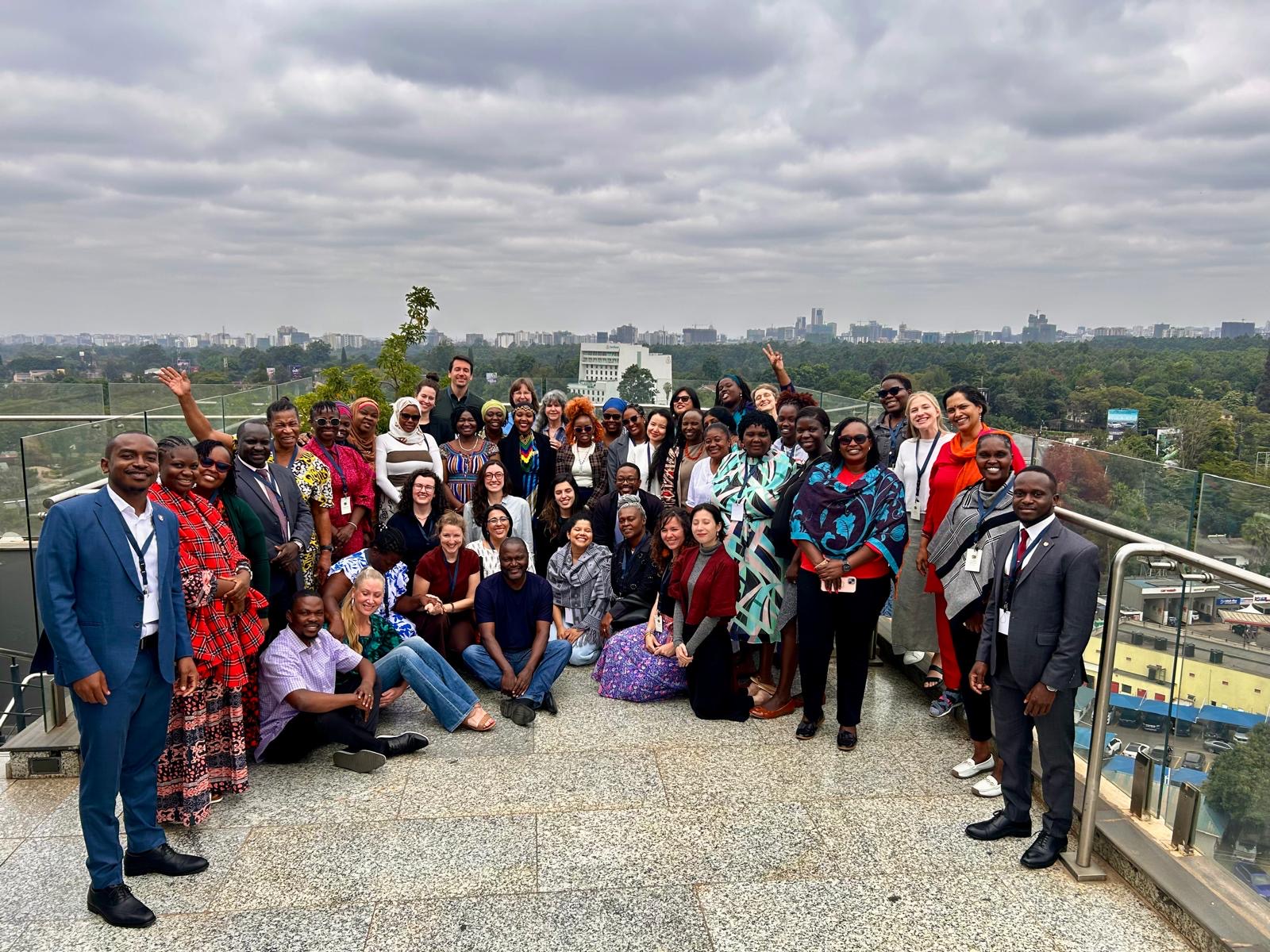
| The 4th Women’s Land Rights Initiative (WLRI) Forum convening took place in Nairobi from June 28 – July 2 and, taking on the momentum of a triple-COP year, the Forum was used as a gathering to strategize collectively to strengthen connections across the diverse community. Women4Biodiversity has been engaged in the initiative since its inception in 2023 in Berlin and has been contributing to the various thematic work streams, including global advocacy. Hosted by the Robert Bosch Stiftung, TMG Research and the Huairou Commission, the event brought together grassroots organisations, (inter)national NGOs, government institutions and donors from around the world. |